
01
The labour
On paper, everything should be progressing.
The observations line up. The history is unremarkable. Nothing in front of you says this should be slow.
 Join the priority list
When a labour stalls and everything you know says it should not be, the answer is often in the tissue, not the position.
I built this method for the moments technique could not explain. The founding round sold out with 75 practitioners. The next intake opens in 2027, and I open it to the priority list before anyone else. Leave your details and you will be first to hear.
The moment
The labour
The observations line up. The history is unremarkable. Nothing in front of you says this should be slow.
The baby
Progress slows and there is no clear reason for it. Nothing you can point to and name out loud.
Your response
Positions. Movement. Timing. All of it chosen with care, and all of it for good reason.
The gap
The moment is rarely dramatic. It is quiet, and mostly internal. But it leaves a question you carry home with you.
And the question that follows
If you find yourself here, it is not because you lack skill, effort or care. You have attended many births. You understand physiology. You use positioning thoughtfully. The usual explanations just feel incomplete. Not wrong. Only insufficient.
Why technique is not always enough
It focuses on maternal posture, maternal movement and the pathway we hope baby will take. What it tends to leave out is how fascial tissue influences baby, what tension does to the structures that matter for birth, and how the nervous system shapes where a baby is allowed to go.
Two labours can look identical from the outside and behave completely differently on the inside. Without a way to read those internal dynamics, we end up responding to outcomes instead of understanding causes.
What most models leave out
Tap any of them to see what I mean.
The method
The G.Lorri™ Fetal Positioning Method is a fascia based framework for understanding how babies behave in relation to tissue, biomechanics and the lived reality of the pregnant body.
Rather than teaching you what to apply in a given moment, it teaches you how to interpret. It gives language and structure to what you are already seeing, feeling and noticing, but may not yet have had a way to say clearly.
The question stops being what should I do next and becomes what is baby responding to, and why.
What you are joining the list for
This is designed the way experienced practitioners actually learn. Through understanding first, then touch, then dialogue, then time.
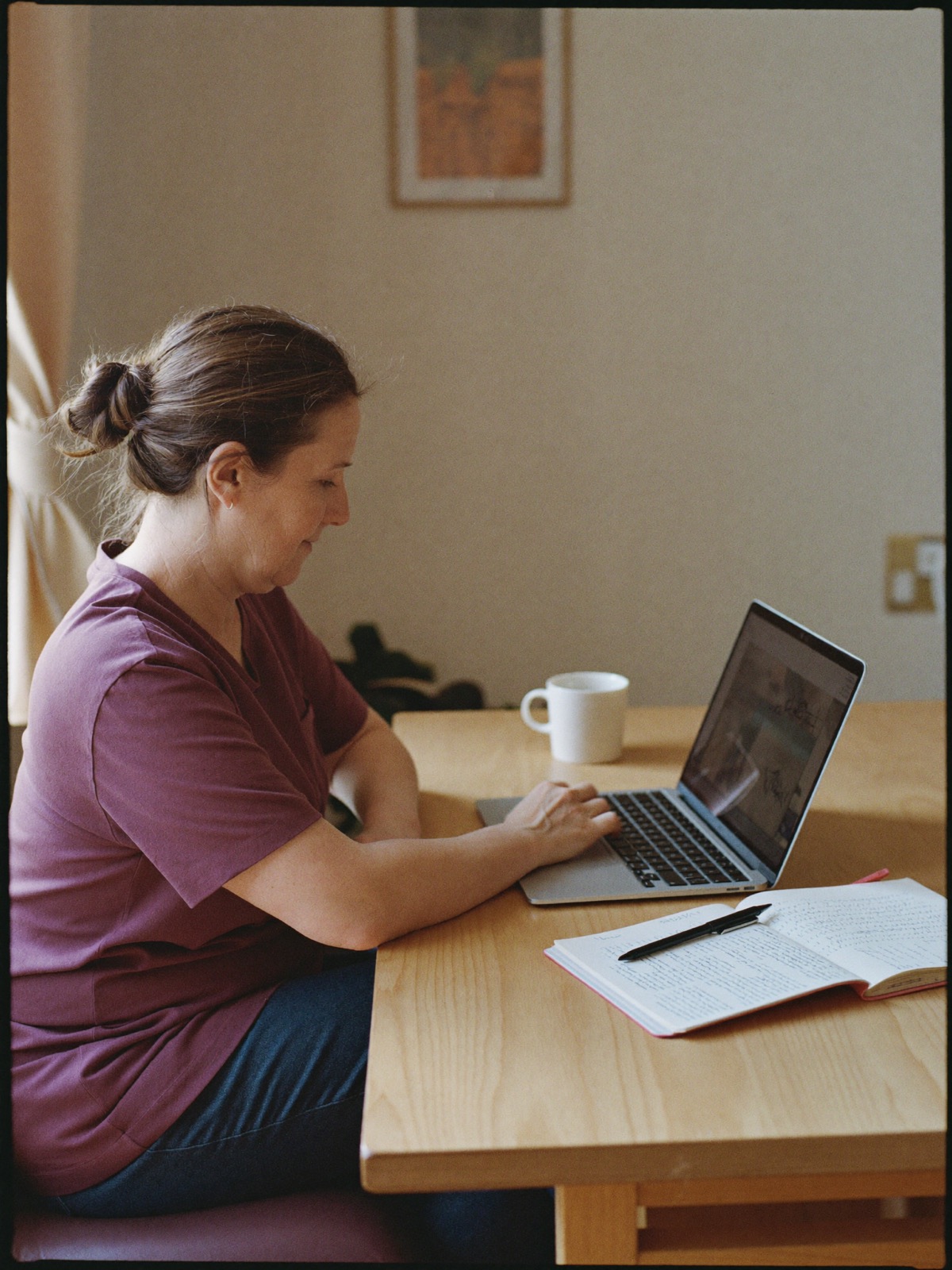
Six modules that build the framework in your head before it ever reaches your hands. Reflective by design, and paced so you can move through it alongside a working caseload.
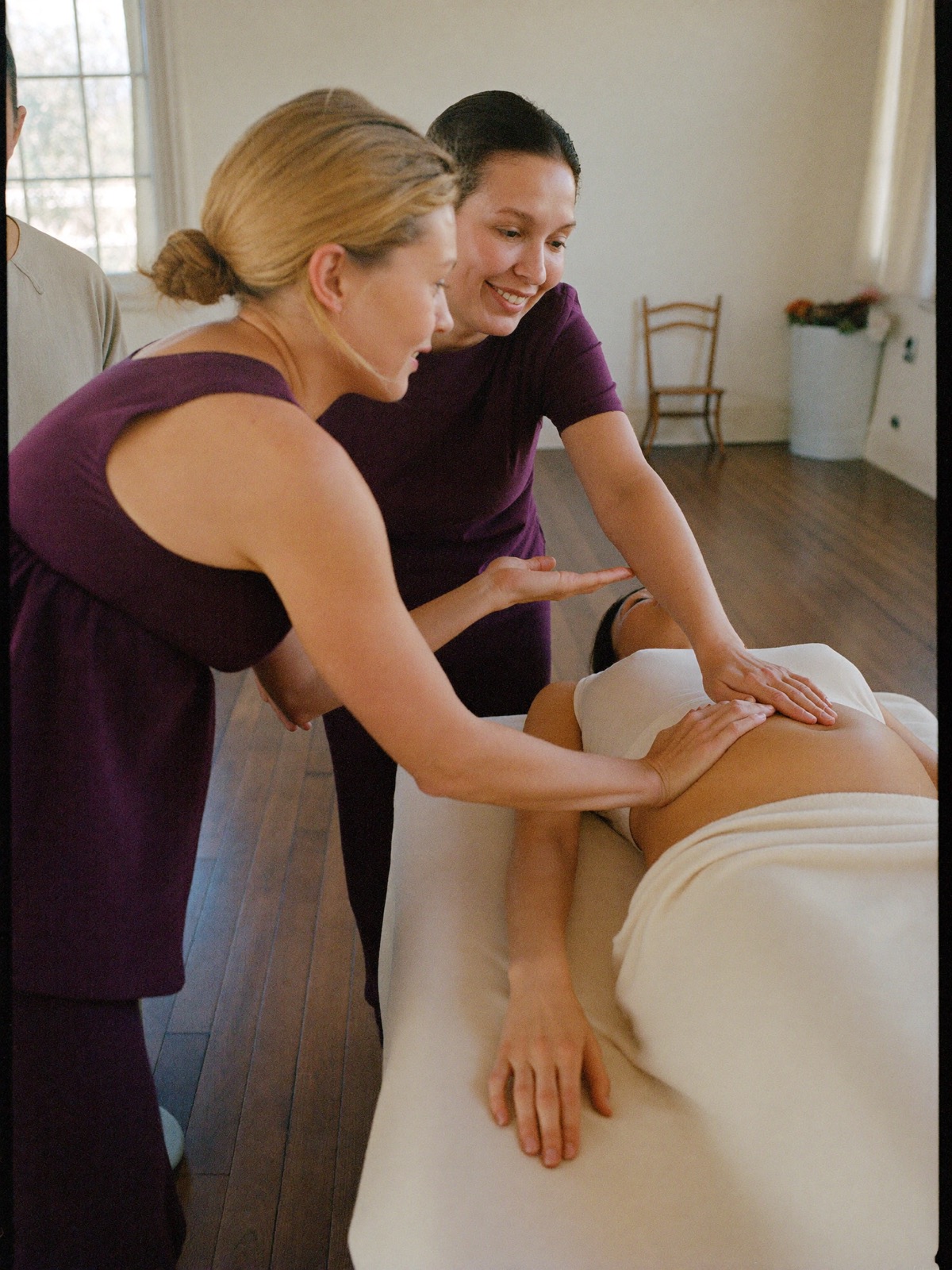
Melbourne, Friday to Sunday. This is where you learn the hands on work. Small group, real pregnant clients, fully catered so you can stay present across all three days.
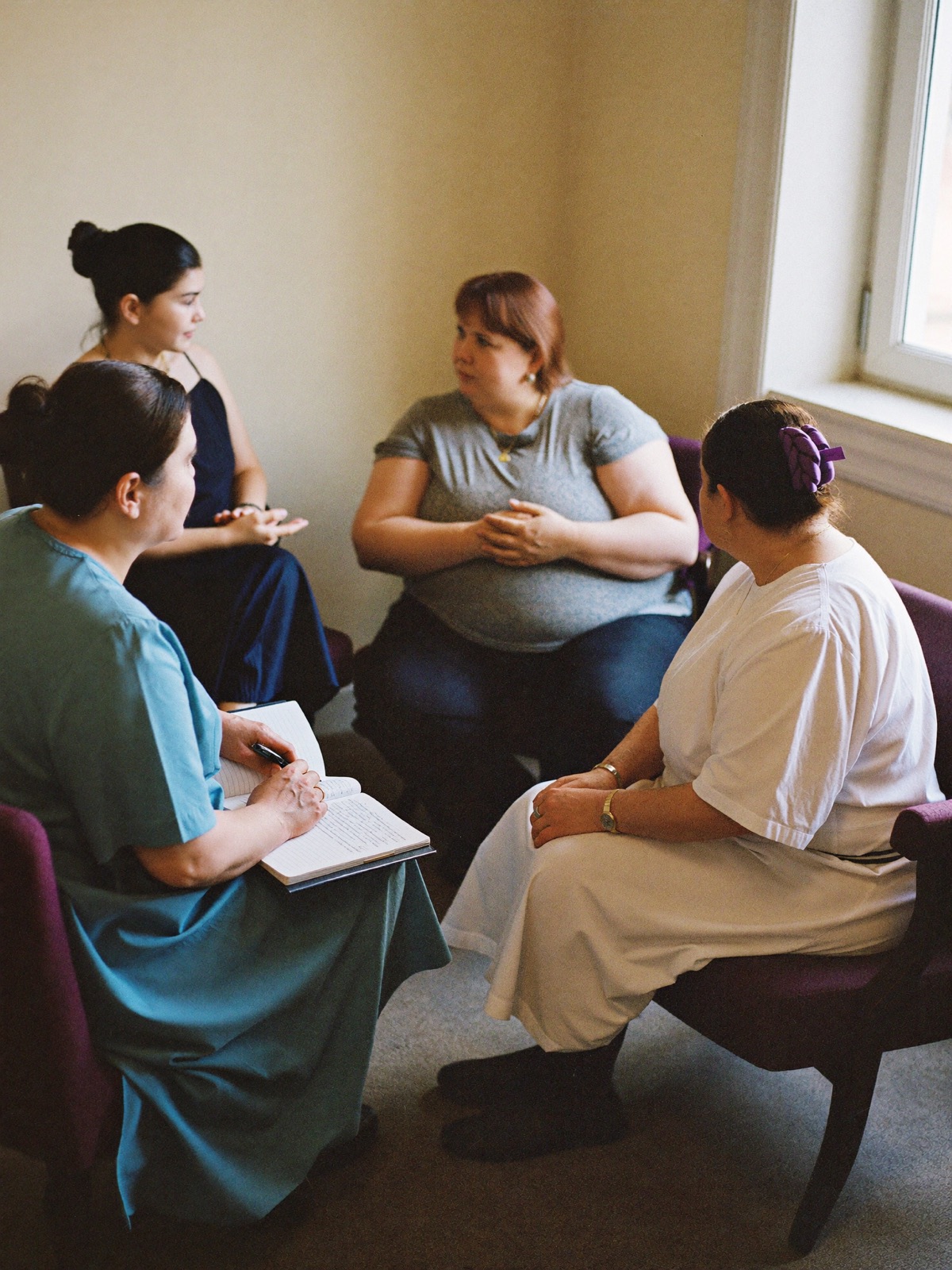
A dedicated online space for questions, clarification and dialogue. Not a place to prove competence. A place to think out loud with people working on the same framework.
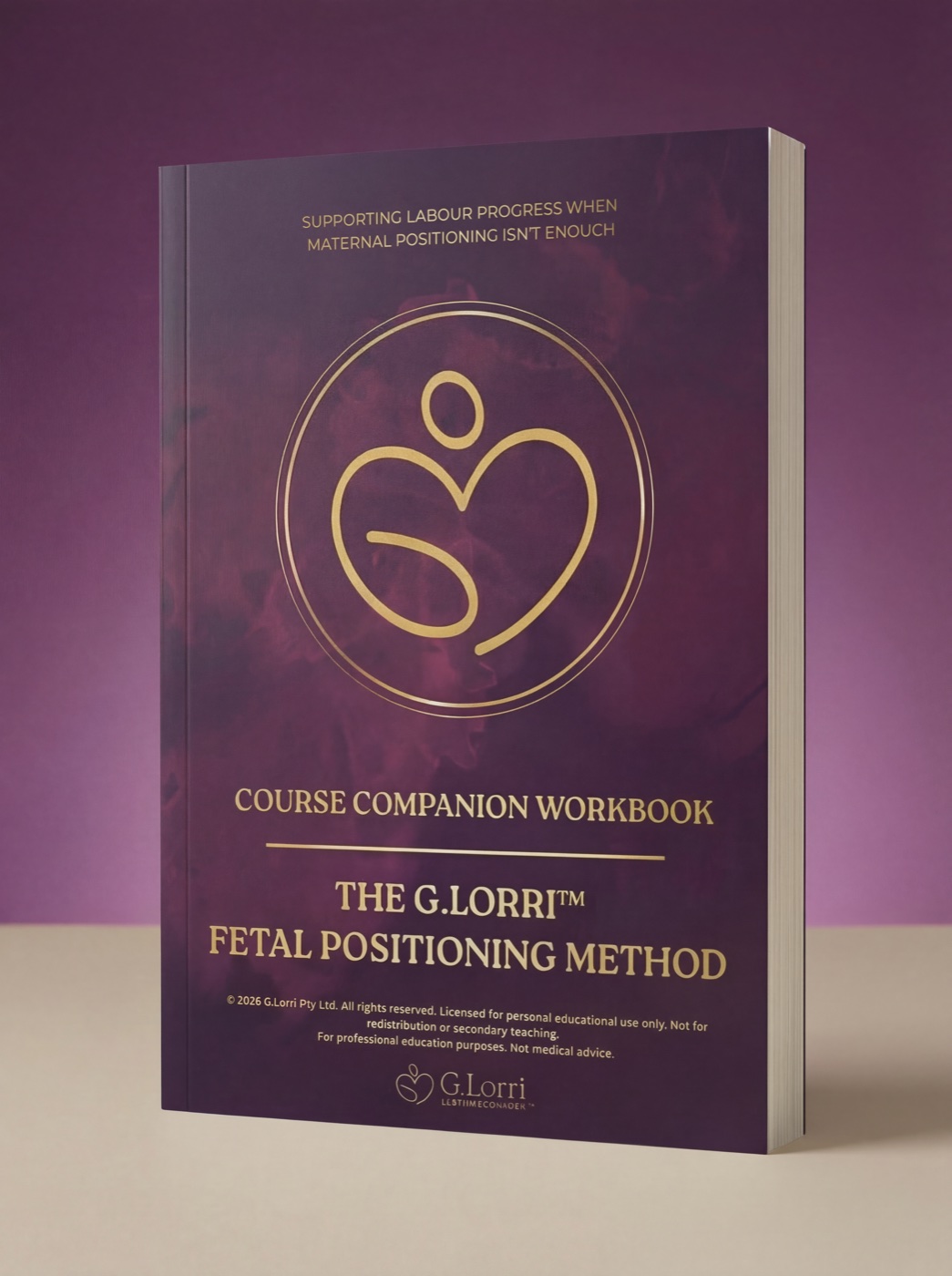
A physical companion posted to you, built to hold your notes, your palpation findings and your case reflections as you move through the material.
Inside the online course
Each one builds on the last, so insight deepens rather than piles up. By the end the aim is not mastery. It is confidence in your own thinking.
We revisit anatomy as living, responsive tissue. The focus is on reorienting how you see and relate to the body in pregnancy and birth. You start building the lens the whole method rests on, learning to notice tension, function and fascia as things that move and adapt over time. Less about memorising structures, more about seeing the body with fresh clarity.
Tension communicates long before labour begins. You explore how a body expresses itself through posture, breathing, pregnancy discomforts and fascial lines. Instead of treating these as isolated symptoms, you learn to read them as meaningful information about baby’s position, maternal wellbeing and the pathways labour may take. This is the shift from problem solving to interpretation.
Your hands become instruments of insight. You learn to locate and interpret soft tissue tension through touch, developing real sensitivity to what sits beneath the surface. Abdominal palpation is revisited with a new intention. Not simply to locate baby, but to sense texture, tone, responsiveness and the relationship between layers.
This is where the framework comes together. You move past simplified labels and start understanding less than optimal positions in relation to fascial patterns and whole body organisation. You are guided in applying soft tissue approaches that work with the body’s own intelligence rather than trying to override it, with real demonstrations and clinical reasoning for when labour does not progress as expected.
Tension is not released through force. It is invited. This module introduces a carefully considered library of manual techniques grounded in safety, consent and practitioner skill. Ligament tension release, fascial work and supportive stretches, taught in context so you know how and when to use them based on what you are actually feeling.
The final module bridges understanding and real world application through case studies that reflect common patterns, nuanced presentations and genuinely complex labours. The intention here is integration rather than completion. You leave with tools, and more importantly with clarity you can keep applying as your experience grows.
Certificate of completionInside the three days
The workshop is where the method stops being theoretical. You feel tissue respond, you assess in real time, and you work with pregnant clients under direct guidance.
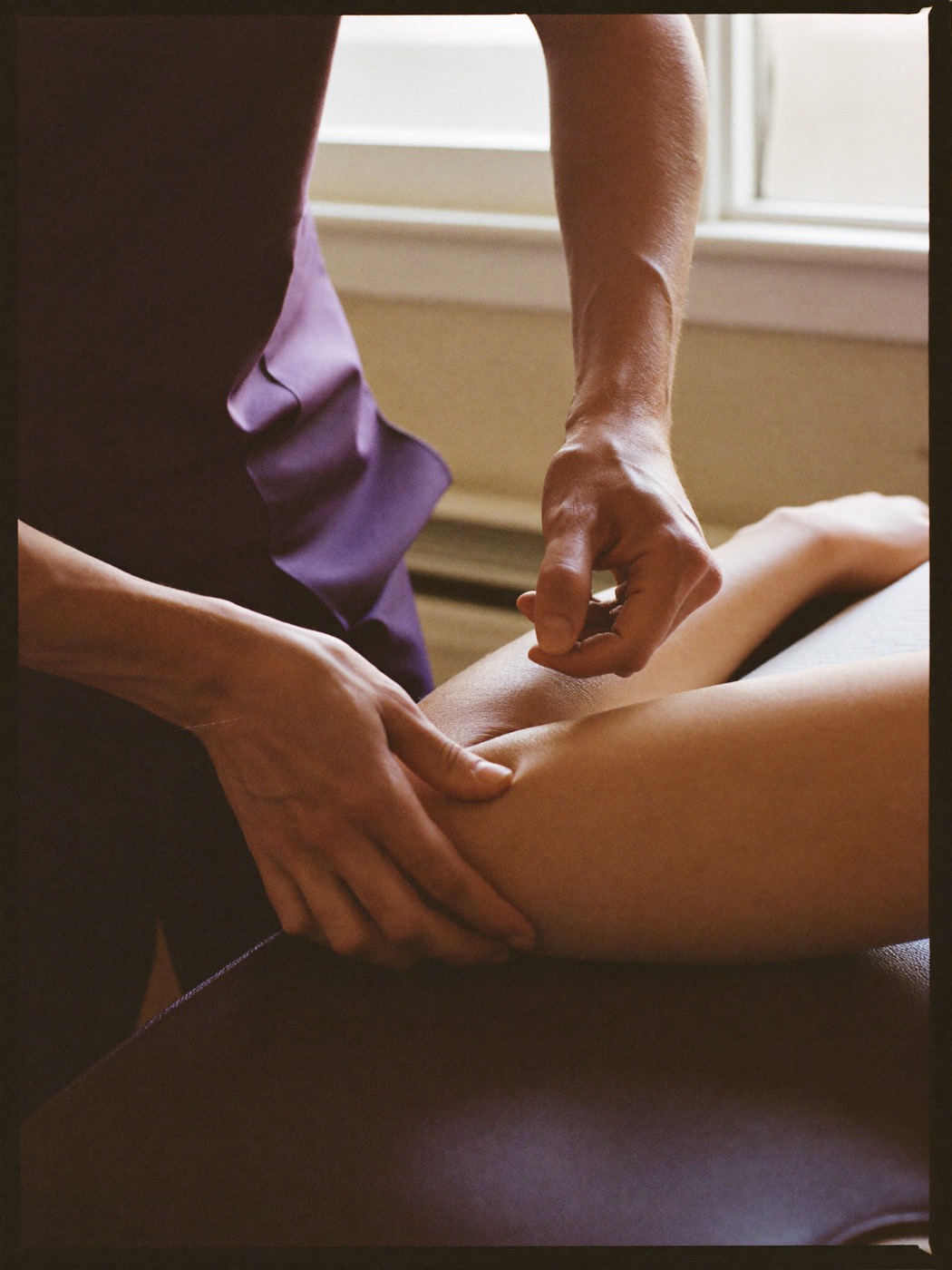
Before technique comes sensitivity. You learn to tell tissue textures apart, feel how fascia moves, and recognise what is under your hands with real clarity. Then into the three core structures, fascia, muscle and ligament, and the techniques for each.
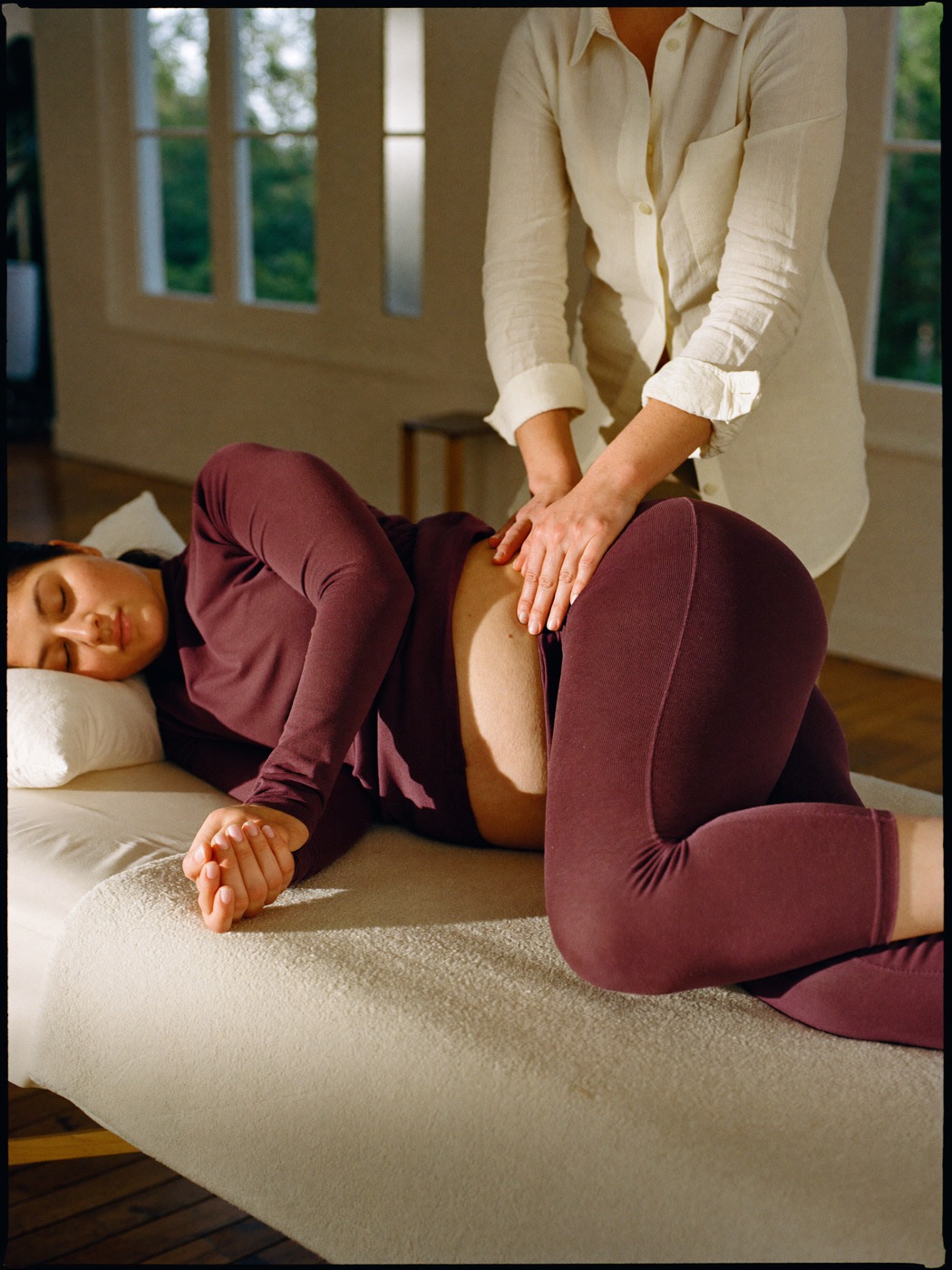
Eleven key areas of the body, from sacrum and psoas to diaphragm, ribs, abdomen and legs. You practise each systematically, then spend the afternoon applying the assessment and release work with real pregnant clients.
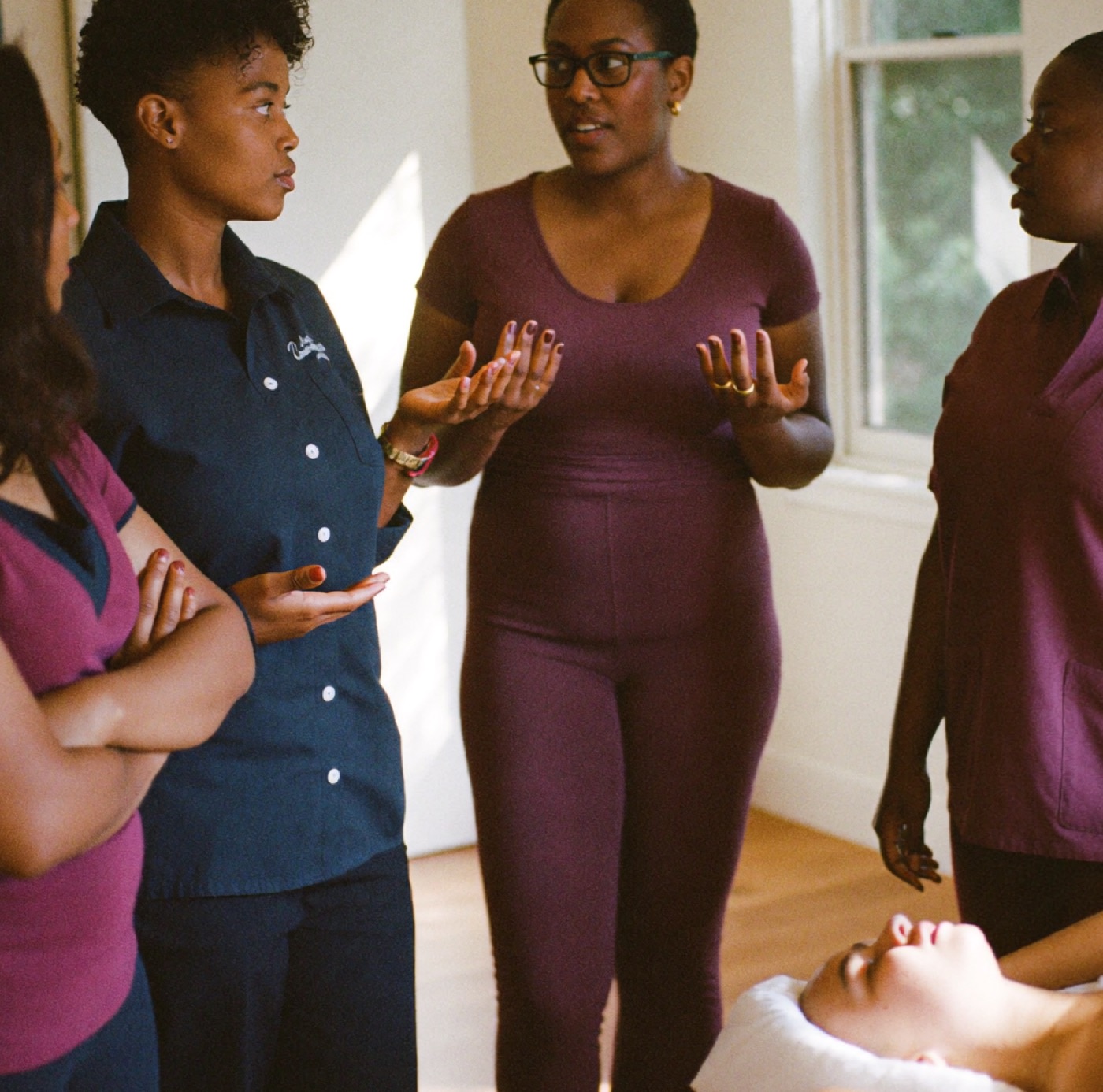
The most nuanced part of the framework. Recognising when the nervous system is the contributing factor, the fascia based technique used to work with it, and the assessment points for tone. We close with case review and your certificate.
What changes
Practitioners rarely describe this as learning a technique. They describe it as their attention changing shape.
Moving faster to find the thing you were missing.
Instead of reaching for the next technique, your attention turns inward. Toward tissue tone. Toward asymmetries you previously could not name. Toward how baby is responding inside the space that is actually available.
Choosing something, anything, because the room needed movement.
You no longer feel pressure to intervene simply because progress has stalled. You get better at discerning what this particular situation is asking for, and interventions get chosen with intention rather than urgency.
Holding a lot at once and hoping none of it slipped.
Conversations feel calmer. You can explain what you are noticing without speculating or over justifying. Collaboration with colleagues gets easier because you finally share language for it.
Honest fit
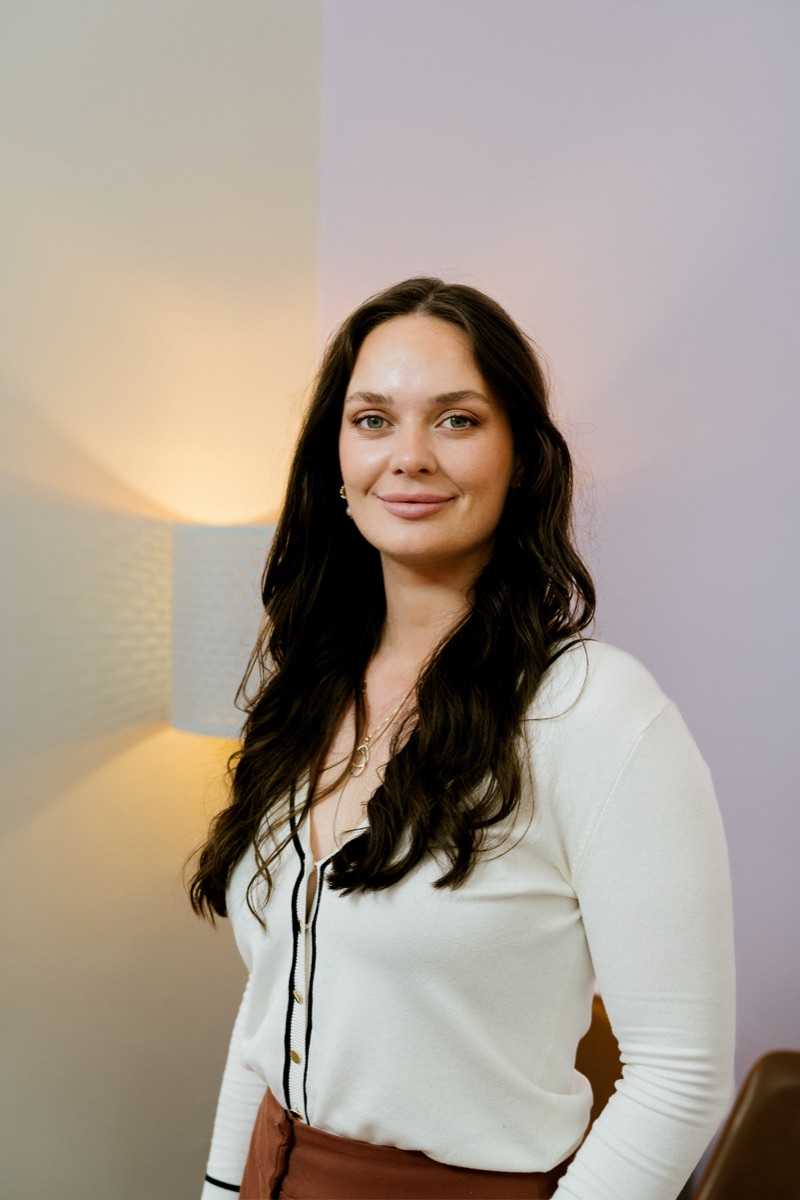
Who is teaching this
I am a registered nurse and midwife. I have spent more than ten years in birth rooms and over twelve hundred sessions in clinic, and for a long time I had the same nagging feeling you probably have.
That something real was happening in front of me that my training had not given me language for. So I kept following it. Through tissue, through fascia, through what bodies were telling me when I slowed down enough to listen.
This method is what came out of that. It is not a replacement for what you already do well. It sits alongside it, and offers depth where other models simplify.
I did not build this to be impressive. I built it because I needed it, and then practitioners kept asking me for it.
Straight answers
I would rather you know the edges of this work before you join the list than discover them afterwards.
This is an educational framework. It strengthens how you interpret what you see. It does not expand what you are legally qualified to do, and it does not train you to diagnose or treat beyond your existing qualifications.
Internal vaginal techniques are not taught here. The emphasis is refined external assessment, fascial interpretation and hands on work grounded in safety and consent, with referral where internal work is clinically relevant.
You receive a certificate of completion. The course is not currently registered for CPD hours and it is not designed to replace your qualifications. Its value shows up in how you practise, not on paper.
Priority list
Seventy five practitioners took the founding round and it closed. The next intake opens in 2027, and the group stays deliberately small so I can keep the workshop hands on.
Everyone on this list hears first. Dates, details and enrolment go to you before anything is announced publicly.
Two minutes. No cost and no commitment of any kind.
A short letter from me about what the method is, and how the intake will work.
Dates, details and enrolment for 2027 go to this list first, then everywhere else.
Thank you. A welcome note is on its way to your inbox now. You will hear from me before the 2027 intake is announced anywhere else, so keep an eye out, and check your junk folder just in case.
Before you ask
For this framework, yes. The hands on component is not an optional extra. It is where the work becomes embodied through touch, observation and guided exploration. The online modules build the thinking, the workshop builds the skill. If you know you cannot travel, this is not the right fit for now, and I will be honest with you about that rather than take your money.
No. It integrates with what you already do well. It gives you more clarity about when and why certain approaches are likely to help. It does not position itself against other models, it builds alongside them and offers depth where they simplify.
That is very common, especially if your training focused more on observation than palpation. This work does not assume mastery. It develops sensitivity progressively. You build conceptual clarity online first, so you understand what you are assessing before you interpret it through touch. Confidence comes from understanding what your hands are sensing, not from repetition.
The online content is flexible so you can move at a considered pace around your work. The workshop is three consecutive days, Friday to Sunday, and it is immersive by design. You will be asked to complete the online component before you attend so the in person time can go straight into application.
The method is grounded in anatomy, fascial biofeedback and maternal collaboration, and it has been refined through years of repeated clinical application in pregnancy and birth. It is not a replacement for evidence based practice. It is a structured way of interpreting tissue behaviour within the context of physiology, and for many practitioners it gives coherence to patterns they had already observed but could not yet articulate.
It likely will, and that is fine. Not by dismissing what you know, but by expanding how you interpret it. For practitioners who value thoughtful growth this tends to feel less like contradiction and more like integration. Complexity becomes more intelligible, not more confusing.
Because the group is small on purpose and the founding round sold out before it was widely advertised. Everything for 2027 goes to this list first. There is no cost and no obligation in being on it. It simply means you get to decide, rather than find out after the fact.
If you have ever left a labour sensing something deeper was happening but had no language for it, you already understand why this exists.
Join the priority list →
